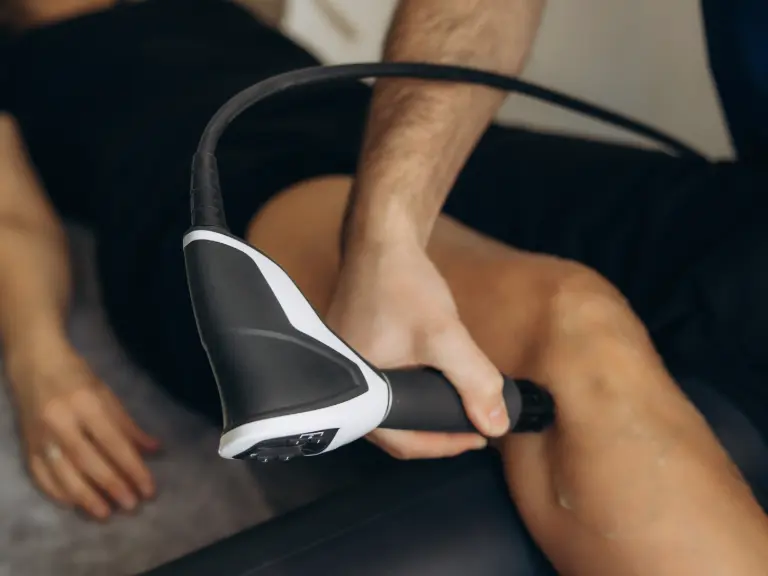










Advanced shockwave therapy in NW Calgary for stubborn tendon, heel, elbow, shoulder, and soft-tissue pain.
If you have been dealing with pain that keeps coming back, even after rest, stretching, massage, or basic exercises, shockwave therapy may be a helpful next step.
At Brentwood Physio, shockwave therapy is not treated like a quick machine add-on. It is used as part of a proper physiotherapy assessment and treatment plan, so we can understand what is causing your pain, target the right tissue, and help you get back to moving with more confidence.
Call 403-282-8050
Trusted by Calgary patients for over 20 years. Family-run. Physiotherapist-led. Located in NW Calgary.
Shockwave Therapy in NW Calgary for Pain That Hasn’t Gone Away
Some injuries do not respond well to rest alone.
You take a few weeks off. The pain improves a little. Then you go for a walk, return to the gym, play a sport, or stand too long at work — and the pain comes right back.
That pattern is common with tendon and soft-tissue conditions like:
- Plantar fasciitis
- Achilles tendon pain
- Tennis elbow
- Golfer’s elbow
- Rotator cuff tendon pain
- Patellar tendon pain
- Shin splints
- Chronic soft-tissue irritation
- Calcific tendon irritation
- Stubborn muscle and tendon pain
Shockwave therapy is often used when an injury has become stubborn, recurring, or slow to heal.
At Brentwood Physio, we use shockwave therapy to help stimulate the body’s natural healing response while also addressing the movement, strength, mobility, and loading issues that may be keeping the problem around.
What Is Shockwave Therapy?
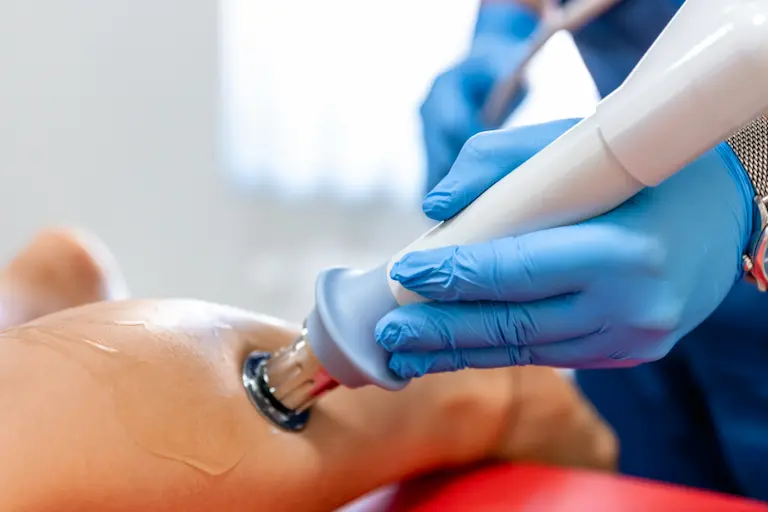
Shockwave therapy, also called extracorporeal shockwave therapy or ESWT, uses acoustic pressure waves to stimulate irritated or injured tissue.
The treatment is non-invasive. There are no needles, no surgery, and no medication injected into the area.
During treatment, a physiotherapist applies a handheld device to the affected area. The device delivers controlled pulses into the tissue. These pulses are intended to help stimulate local blood flow, tissue repair processes, and pain modulation in the affected area.
In simple terms:
Shockwave therapy gives stubborn tissue a strong stimulus to help restart a healing process that may have slowed down.
It is commonly used for tendon and soft-tissue injuries that have not fully improved with rest, stretching, or basic treatment alone.
Conditions Shockwave Therapy Can Help Treat
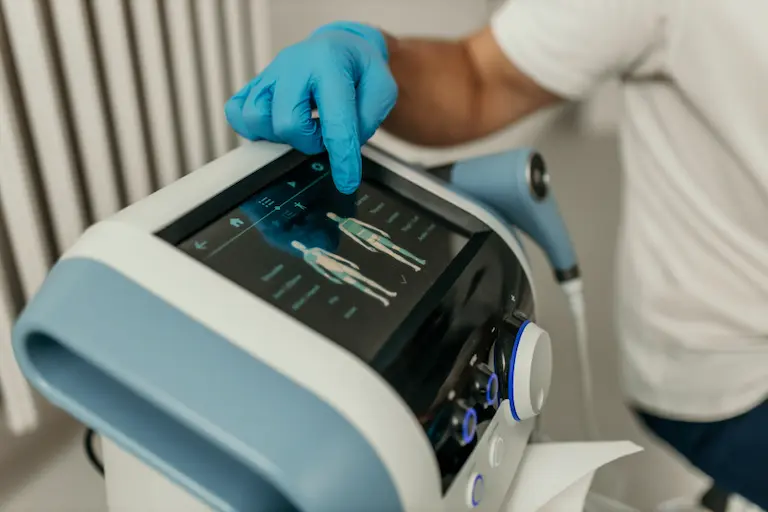
Shockwave therapy may be recommended for several common musculoskeletal conditions.
Plantar Fasciitis and Heel Pain
Plantar fasciitis can cause sharp heel pain, especially with the first few steps in the morning or after sitting. Shockwave therapy may help stimulate healing in the plantar fascia and reduce sensitivity over time.
Achilles Tendon Pain
Achilles tendon pain can make walking, running, stairs, and sports frustrating. Shockwave therapy may be used alongside calf strengthening, load management, and mobility work.
Tennis Elbow
Tennis elbow is not just a tennis injury. It is common in people who lift, grip, type, climb, work with tools, or perform repetitive arm movements. Shockwave therapy may help calm irritated tendon tissue around the outside of the elbow.
Golfer’s Elbow
Golfer’s elbow affects the inside of the elbow and can be aggravated by gripping, pulling, lifting, and repetitive wrist movement. Shockwave may be used as part of a larger elbow rehab plan.
Rotator Cuff and Shoulder Tendon Pain
Shoulder tendon pain can make it difficult to reach overhead, sleep on your side, lift, work out, or play sports. Shockwave therapy may be considered for certain tendon-related shoulder conditions.
Patellar Tendon Pain / Jumper’s Knee
Pain at the front of the knee can affect running, jumping, squatting, stairs, and sports. Shockwave may be used alongside progressive strengthening and activity modification.
Shin Splints and Lower Leg Pain
For recurring lower-leg pain, shockwave therapy may be used when appropriate, but a proper assessment is important to understand whether the issue is related to training load, footwear, strength, mobility, or another factor.
Chronic Tendon and Soft-Tissue Pain
Shockwave therapy is often considered for pain that has been present for weeks or months and has not responded fully to more basic treatment.
How Shockwave Therapy Works
Shockwave therapy is designed to create a controlled mechanical stimulus in the tissue.
That stimulus may help:
- Increase local blood flow
- Stimulate tissue repair activity
- Reduce pain sensitivity
- Support tendon and soft-tissue healing
- Improve tolerance to movement and loading
- Help stubborn injuries respond better to rehab
But shockwave therapy is not magic.
The best results usually happen when it is paired with a proper physiotherapy plan. That may include strengthening, mobility work, changes to activity load, footwear advice, sport-specific rehab, hands-on therapy, or education on what to avoid while the tissue settles.
At Brentwood Physio, the goal is not just to reduce pain for a few days. The goal is to help you understand the problem and build a plan that gives the injury a better chance of staying better.
What Does Shockwave Therapy Feel Like?
Most patients describe shockwave therapy as uncomfortable but tolerable.
You may feel a tapping, pulsing, or deep pressure sensation over the painful area. The intensity can be adjusted based on your comfort level and the tissue being treated.
A typical shockwave portion of treatment is usually short. The full appointment may also include assessment, education, exercise prescription, hands-on treatment, or changes to your rehab plan.
After treatment, some people feel temporary soreness, tenderness, warmth, or sensitivity in the area. This usually settles. Your physiotherapist will explain what to expect and what activities to modify after your session.
Is Shockwave Therapy Right for You?
Shockwave therapy may be a good fit if:
- Your pain has lasted longer than expected
- You have tried rest but the pain keeps returning
- You have tendon pain that flares with activity
- You have plantar fasciitis or heel pain
- You have elbow, Achilles, shoulder, or knee tendon pain
- You want a non-invasive option before considering more aggressive treatment
- You want treatment from a physiotherapist who can pair shockwave with rehab
Shockwave therapy may not be appropriate for everyone. Your physiotherapist will review your health history, symptoms, and goals before recommending it.
This is especially important if you are pregnant, have certain circulation or bleeding conditions, are on blood thinners, have cancer in the treatment area, have an infection, have certain nerve or vascular concerns, or have other medical considerations.
If shockwave is not the right fit, we will tell you. The goal is to recommend the right care, not force every patient into the same treatment.

Why Choose Brentwood Physio for Shockwave Therapy in Calgary?
Physiotherapist-Led Care
Your treatment starts with an assessment. We look at the painful area, but we also look at the bigger picture: strength, movement, load, mobility, activity demands, and what may be keeping the injury irritated.
Family-Run, Not Corporate
Brentwood Physio has been family-run for over 20 years. Patients come here because they want experienced care, honest communication, and a clinic that still feels personal.
Premium, One-on-One Attention
Shockwave therapy is most useful when it is applied thoughtfully. We take the time to explain what we are doing, why we are doing it, and how it fits into your recovery plan.
Strong Local Reputation
Brentwood Physio is trusted by patients across NW Calgary. Our clinic has helped thousands of people recover from pain, injury, and mobility issues.
Direct Billing Available
We can direct bill many major insurance providers, making your visit simpler and more convenient.
Convenient NW Calgary Location
Brentwood Physio is located on Northmount Dr NW, making it convenient for patients in Brentwood, Varsity, Charleswood, Collingwood, Dalhousie, Banff Trail, Capitol Hill, Montgomery, and surrounding NW Calgary communities.
What to Expect at Your First Shockwave Appointment
Your first visit is not just “point the machine where it hurts.”
Here is what typically happens:
1. We Listen First
Your physiotherapist will ask about your pain, how it started, what makes it worse, what you have already tried, and what you want to get back to.
2. We Assess the Area
We check movement, strength, tenderness, joint mobility, tendon loading, and the activities that reproduce your symptoms.
3. We Decide If Shockwave Makes Sense
Shockwave therapy is helpful for some conditions, but not all. If it fits your case, we will explain why. If it does not, we will recommend a better option.
4. We Treat the Right Tissue
Shockwave is applied to the target area using a handheld applicator. The intensity is adjusted to your tolerance.
5. We Build the Rehab Plan
You may also receive exercises, activity modifications, loading guidance, mobility work, or hands-on treatment depending on your condition.
6. We Progress Over Time
Most stubborn injuries need a plan, not a one-off session. Your physiotherapist will recommend the appropriate frequency based on your condition, goals, and response to treatment.
Shockwave Therapy and Physiotherapy Work Better Together
One of the biggest mistakes people make with shockwave therapy is treating it like a standalone cure.
For many tendon and soft-tissue injuries, pain is only part of the problem. The bigger issue may be that the tissue is not tolerating load properly.
That is why Brentwood Physio combines shockwave therapy with physiotherapy.
Depending on your condition, your plan may include:
- Strengthening exercises
- Tendon loading progressions
- Mobility work
- Gait or running advice
- Sport-specific rehab
- Manual therapy
- Footwear or activity guidance
- Education on what to avoid temporarily
- A clear return-to-activity plan
Shockwave may help stimulate the tissue. Rehab helps the tissue become stronger, more tolerant, and more prepared for real life.
That combination is where the real value is.
Common Reasons Calgary Patients Book Shockwave Therapy
Patients often come to us after saying things like:
- “My heel pain is worst first thing in the morning.”
- “My Achilles keeps flaring every time I run.”
- “My elbow pain will not go away.”
- “My shoulder hurts every time I reach or lift.”
- “I rested for weeks, but the pain came back.”
- “Massage helped temporarily, but it did not fix the problem.”
- “I want to avoid injections or surgery if possible.”
- “I need a real plan, not just another stretch.”
If that sounds familiar, shockwave therapy may be worth discussing with a physiotherapist.